This year’s annual lecture of the Institute for Mathematical and Statistical Sciences (IMSS) coincides with UCL's 200th Bicentennary and will focus on the theme of ''Computational Statistics and Machine Learning''. The UCL department of Statistical Science is delighted to welcome members of the community for an afternoon and evening of discussions on this topic, centered around a keynote talk by Dr. Lester Mackey (Microsoft Research New England and Stanford University). The event will also feature invited talks covering topics in statistical machine learning, and will be followed by a two-day workshop expanding on recent advanced in computational statistics.

Registration and Posters
Registration
The cost is £10 for non-UCL participants and free for UCL participants. Light refreshments will be provided. Link for registration
Call for posters
We welcome poster presentations broadly related to computational statistics and machine learning. Link for poster submission. In case of oversubscription, the organisers reserve the rights to prioritise poster allocations according to the priority areas for this event.
Deadline: 15th March 5pm GMT.
Dr. Lester Mackey
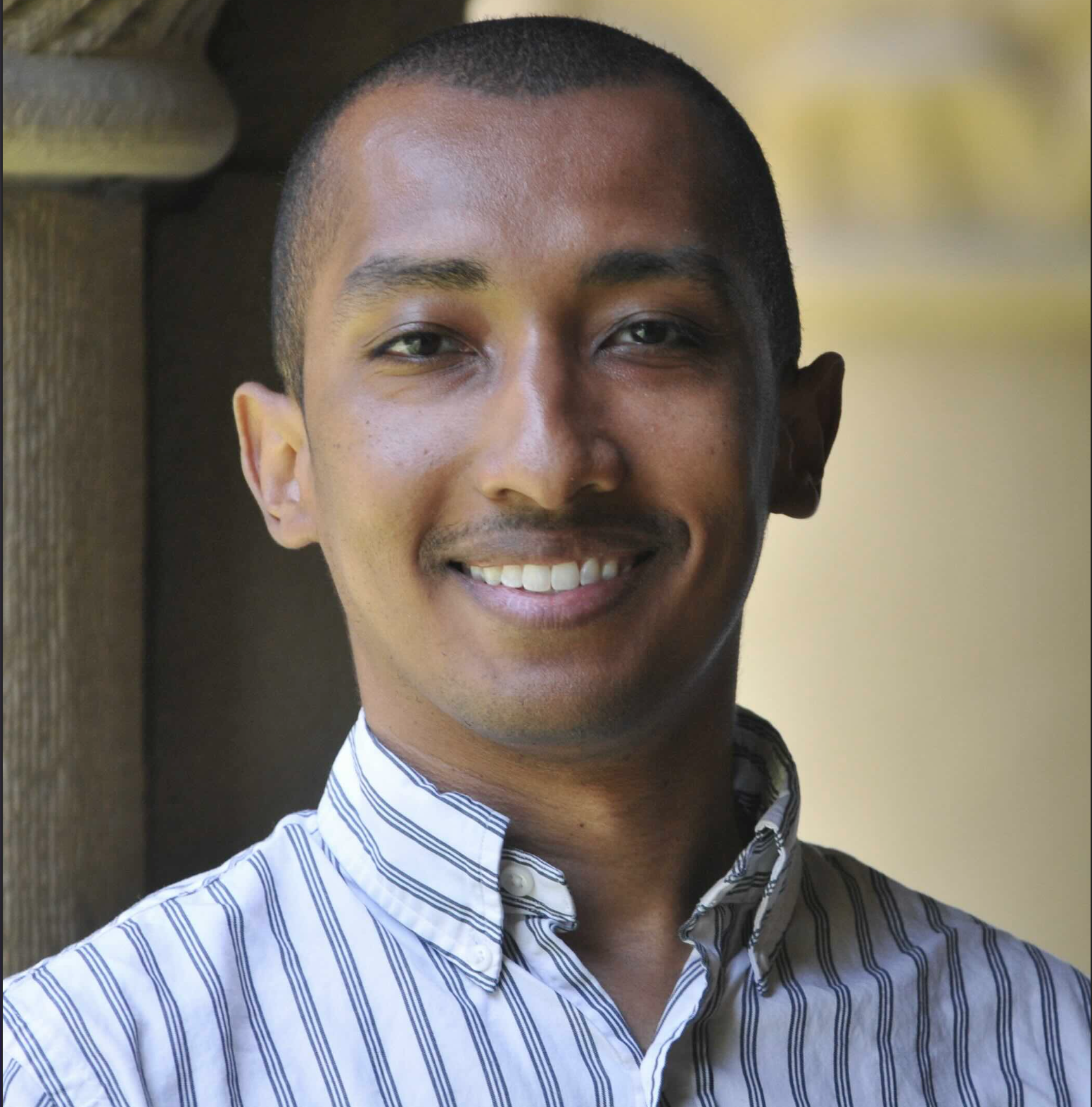
Lester Mackey is a Senior Principal Researcher at Microsoft Research, where he develops machine learning methods, models, and theory for large-scale learning tasks driven by applications from meteorology, healthcare, and the social good. Lester moved to Microsoft from Stanford University, where he was an assistant professor of Statistics and, by courtesy, of Computer Science. He earned his PhD in Computer Science and MA in Statistics from UC Berkeley and his BSE in Computer Science from Princeton University. He co-organized the second place team in the Netflix Prize competition for collaborative filtering; won the Prize4Life ALS disease progression prediction challenge; won prizes for temperature and precipitation forecasting in the yearlong real-time Subseasonal Climate Forecast Rodeo; and received best paper, outstanding paper, and best student paper awards from the ACM Conference on Programming Language Design and Implementation, the Conference on Neural Information Processing Systems, and the International Conference on Machine Learning. He is a 2023 MacArthur Fellow, a Fellow of the Institute of Mathematical Statistics, a Fellow of the American Statistical Association, an elected member of the COPSS Leadership Academy, and the recipient of the 2023 Ethel Newbold Prize and the 2025 COPSS Presidents' Award.
Schedule
Monday, April 27th 2026
| 12:00–12:40 | 📝 Registration |
| 12:40–12:45 | 👋 Welcome from the organisers |
| 12:45–13:45 | Keynote: Stein's Method, Learning, and Inference
Lester Mackey (Microsoft Research & Stanford University) [show abstract]
Stein’s method is a powerful tool from probability theory for bounding the distance between probability distributions.
In this talk, I’ll describe how this tool designed to prove central limit theorems can be adapted to assess and improve the quality of practical inference procedures.
Along the way, I’ll highlight applications to Markov chain Monte Carlo sampler selection, goodness-of-fit testing, generative modeling, de novo sampling, post-selection inference, distribution compression, bias correction, and nonconvex optimization, and I’ll close with opportunities for future work.
|
| 13:45–14:15 | ☕ Coffee break |
| 14:15-15:00 | Title: Private estimation in stochastic block models
Po-Ling Loh (Cambridge University) [show abstract]
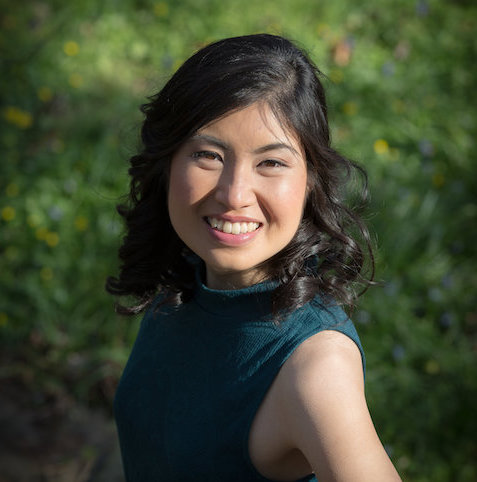
We study the problem of private estimation for stochastic block models, where the observation comes in the form of an undirected graph, and the goal is to partition the nodes into unknown, underlying communities.
We consider a notion of differential privacy known as node differential privacy, meaning that two graphs are treated as neighbors if one can be transformed into the other by changing the edges connected to exactly one node.
The goal is to develop algorithms with optimal misclassification error rates, subject to a certain level of differential privacy.
We present several algorithms based on private eigenvector extraction, private low-rank matrix estimation, and private SDP optimization.
A key contribution of our work is a method for converting a procedure which is differentially private and has low statistical error on degree-bounded graphs to one that is differentially private on arbitrary graph inputs, while maintaining good accuracy (with high probability) on typical inputs.
This is achieved by considering a certain smooth version of a map from the space of all undirected graphs to the space of bounded-degree graphs, which can be appropriately leveraged for privacy.
We discuss the relative advantages of the algorithms we introduce and also provide some lower-bounds for the performance of any private community estimation algorithm.
This is joint work with Laurentiu Marchis, Ethan D'souza, and Tomas Flidr.
|
| 15:00-15:45 | Title: Certified Self-Consistency: Statistical Guarantees and Test-Time Training for Reliable Reasoning in LLMs
Paula Cordero (Imperial College London) [show abstract]
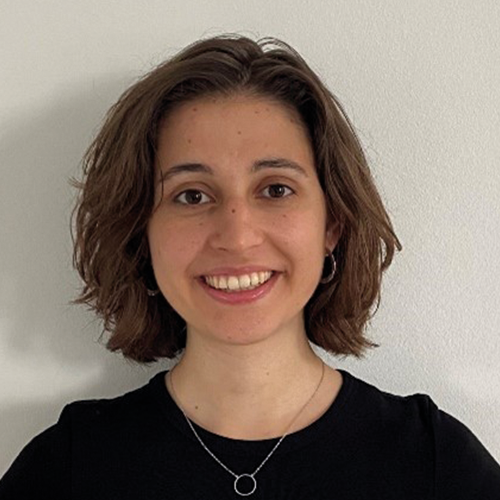
Recent advances such as self-consistency and test-time reinforcement learning (TTRL) improve the reliability of large language models (LLMs) without additional supervision, yet their underlying mechanisms and statistical guarantees remain poorly understood. We present a unified framework for certifiable inference in LLMs, showing that majority voting provides a statistical certificate of self-consistency: under mild assumptions, the aggregated answer coincides with the mode of the model’s terminal distribution with high probability. We derive finite-sample and anytime-valid concentration bounds that quantify this confidence, and introduce the Martingale Majority Certificate (MMC), a sequential stopping rule that adaptively determines when sufficient samples have been drawn. We further prove that label-free post-training methods such as TTRL implicitly sharpen the answer distribution by exponentially tilting it toward its mode, thereby reducing the number of samples required for certification. Building on this insight, we propose new post-training objectives that explicitly optimise this trade-off between sharpness and bias. Together, these results explain and connect two central test-time scaling strategies, self-consistency and TTRL, within a single statistical framework for label-free, certifiable reliability in reasoning LLMs. This work has been done in collaboration with Andrew Duncan.
|
| 15:45–16:15 | ☕ Short break |
| 16:15-17:00 | Title: Geometry-aware Stein discrepancies for model evaluation and inference
Alessandro Barp (University College London) [show abstract]
Assessing the quality of statistical models is challenging when likelihoods are unnormalised or when data lie on non-Euclidean spaces, as classical distances between distributions often become computationally intractable.
In this talk, we show how Stein discrepancies exploit the curvature of the target distribution to provide a computable alternative.
We discuss recent results demonstrating that suitably constructed kernel Stein discrepancies can characterise Wasserstein convergence.
We then connect these ideas to inference on spherical data, where these discrepancies enable robust inference without requiring normalising constants.
|
| 17:00- | 📄 Poster Session & Reception |
Speakers
-

Alessandro Barp
University College London
-
Paula Cordero
Imperial College London
-
Po-Ling Loh
University of Cambridge
-
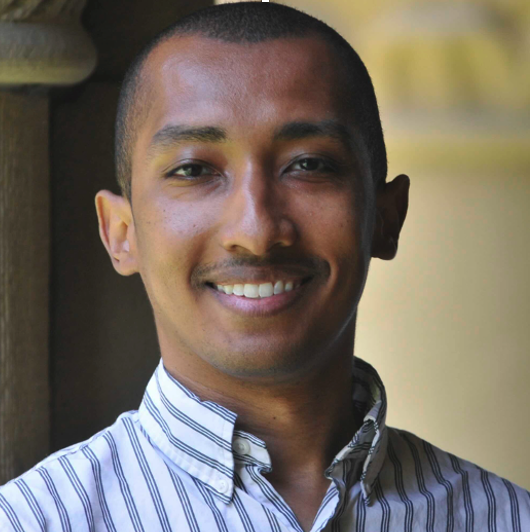
Lester Mackey
Microsoft Research & Stanford University
Organisers
-
Harita Dellaporta
Lead Organiser -
François-Xavier Briol
Co-organiser
-
Zonghao (Hudson) Chen
Co-organiser -
William Laplante
Co-organiser
We are very grateful for the support from UCL Department of Statistical Science, the UCL Institute for Mathematical and Statistical Sciences (IMSS). We would like to thank Amanda Gallant for her help with the organisation of this event.

Location
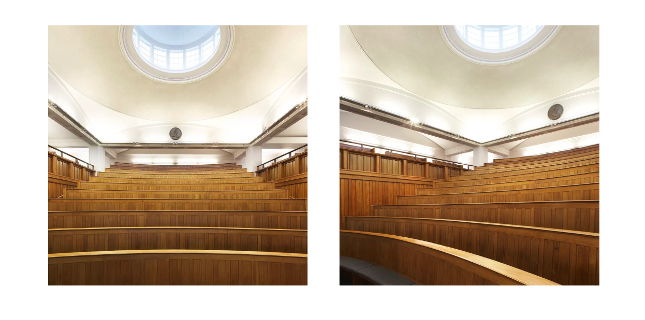
Location: Gustave Tuck Lecture Theatre, Gower St, London WC1E 6BT, UK
Google Maps